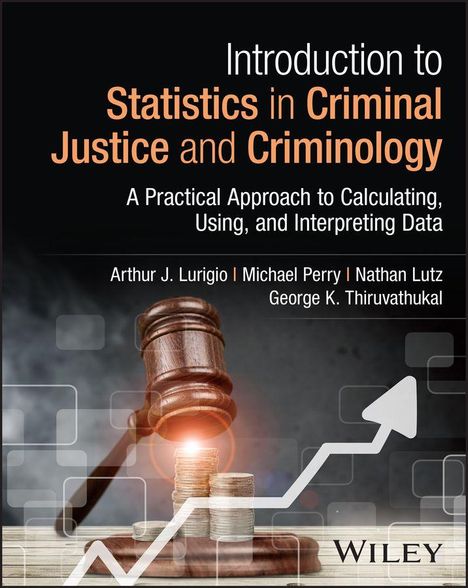
Arthur J. Lurigio: Introduction to Statistics in Criminal Justice and Criminology, Kartoniert / Broschiert
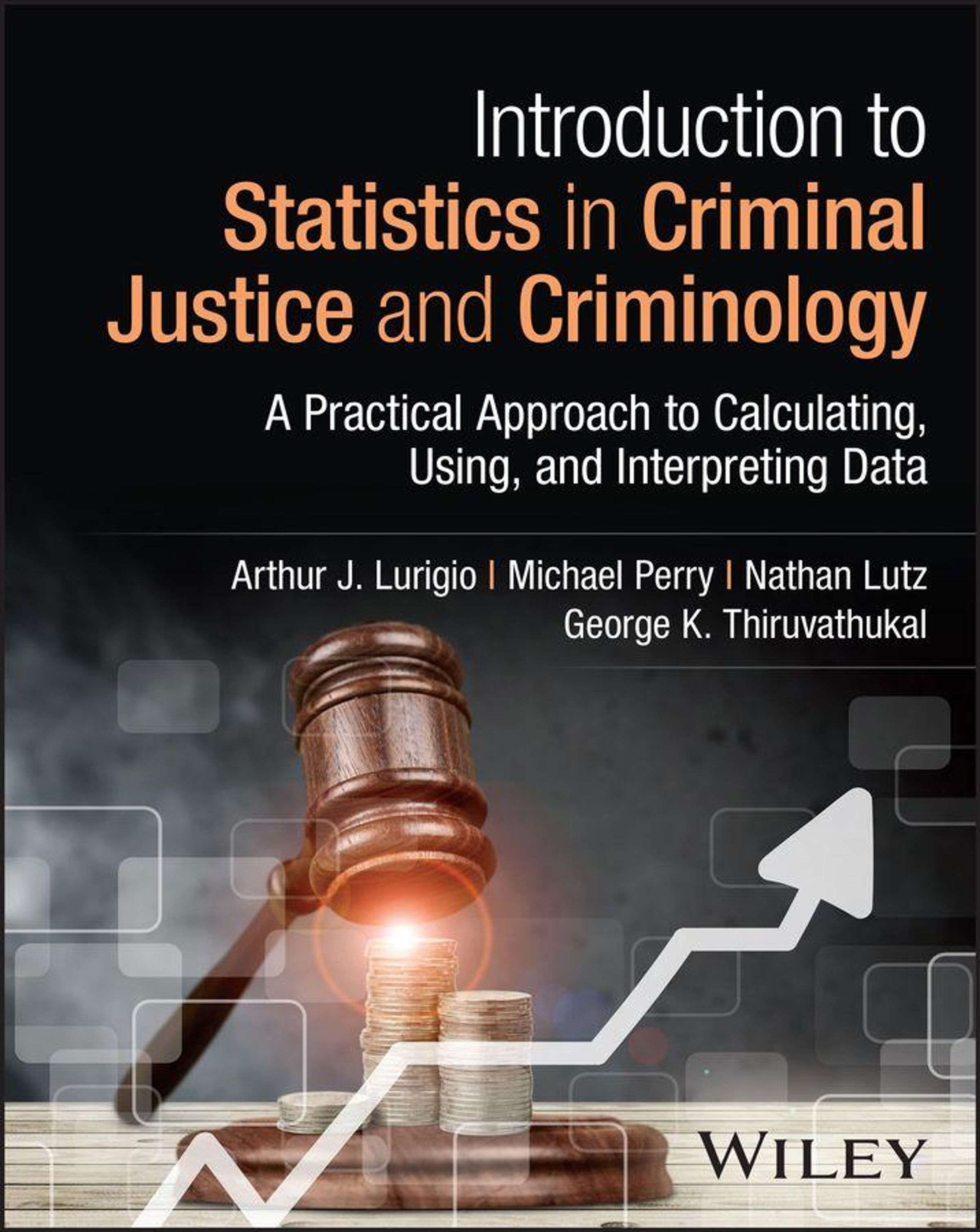
Introduction to Statistics in Criminal Justice and Criminology
- A Practical Approach to Calculating, Using, and Interpreting Data
Sie können den Titel schon jetzt bestellen. Versand an Sie erfolgt gleich nach Verfügbarkeit.
- Verlag:
- John Wiley & Sons Inc, 05/2026
- Einband:
- Kartoniert / Broschiert
- Sprache:
- Englisch
- ISBN-13:
- 9781118559239
- Artikelnummer:
- 12626015
- Umfang:
- 320 Seiten
- Erscheinungstermin:
- 10.5.2026
- Hinweis
-
Achtung: Artikel ist nicht in deutscher Sprache!
Klappentext
Introduction to Statistics in Criminal Justice and Criminology: A Practical Approach to Calculating, Using, and Interpreting Data provides students with a clear, structured path to the quantitative tools that shape empirical inquiry in the field. Written by an interdisciplinary team spanning criminal justice, psychology, mathematics, and computer science, this textbook emphasizes the practical purposes of statistical thinking while explaining how data is organized, described, compared, and analyzed to answer meaningful research questions.
Each chapter opens with a relatable scenario that frames key concepts, guiding students from foundational topics such as descriptive statistics and normal distributions to applications including hypothesis testing, chi-square analysis, regression, ANOVA, and survival analysis. Step-by-step examples, end-of-chapter problems, and intuitive visual displays reinforce learning. A companion software tool strengthens computational literacy, allowing students to work through calculations aligned with chapter material.
Designed for undergraduate and graduate courses in criminal justice statistics, this textbook supports required quantitative training across criminal justice curricula. Students gain the skills to interpret research findings, evaluate evidence critically, and engage in data-informed study and professional practice throughout their careers.