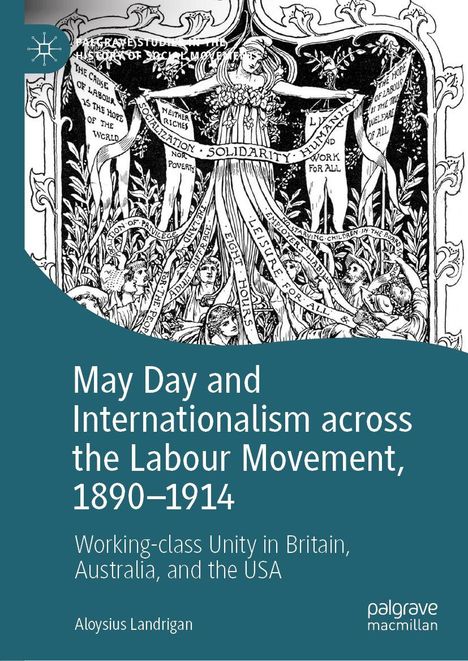
Aloysius Landrigan: May Day and Internationalism across the Labour Movement, 1890-1914, Gebunden
May Day and Internationalism across the Labour Movement, 1890-1914
- Working-class Unity in Britain, Australia, and the USA
Sie können den Titel schon jetzt bestellen. Versand an Sie erfolgt gleich nach Verfügbarkeit.
- Verlag:
- Springer Nature Switzerland AG, 11/2026
- Einband:
- Gebunden
- Sprache:
- Englisch
- ISBN-13:
- 9783032254665
- Artikelnummer:
- 12915882
- Umfang:
- 339 Seiten
- Erscheinungstermin:
- 19.11.2026
- Serie:
- Palgrave Studies in the History of Social Movements
- Hinweis
-
Achtung: Artikel ist nicht in deutscher Sprache!
Klappentext
This book traces the development of May Day, a demonstration and annual celebration of internationalism, unity, and peace for the labour movement and working class. Also known as International Workers' Day or Labour Day, May Day has been observed globally on 1st May since 1890. Focusing on three key sites---London, Melbourne, and New York---the book highlights May Day's interconnected local and international character. Comparing demonstrations across these cities, the author shows how May Day evolved locally while developing across the Anglosphere, revealing the labour movement's constitution, strength, ideals, and objectives.
Although rooted in internationalism, May Day was shaped by each city's sociöeconomics, labour politics, workingclass culture, and urban environment. Alongside these local expressions emerged an idealised May Day drawing on traditional, seasonal, pagan, and medieval imagery shared across the Anglosphere. Examining the internationalism articulated on May Day, the book connects collective identity, socialism, and the working class in opposition to capitalism and imperialism. It also highlights the transnational influence of socialist artwork and poetry, featuring extensive pieces by Walter Crane, works by William Morris, and contributions from other artists.
Finally, the book explores how traditional May Day customs informed labour demonstrations and shaped participants' understandings of them. Through a comprehensive cultural analysis of the labour movement, it offers insights into how workingclass celebrations, demonstrations, artwork, and stories expressed their values and struggles. It is a valuable resource for historians of transnational labour movements, cultural and intellectual history, global urban history, and memory studies.