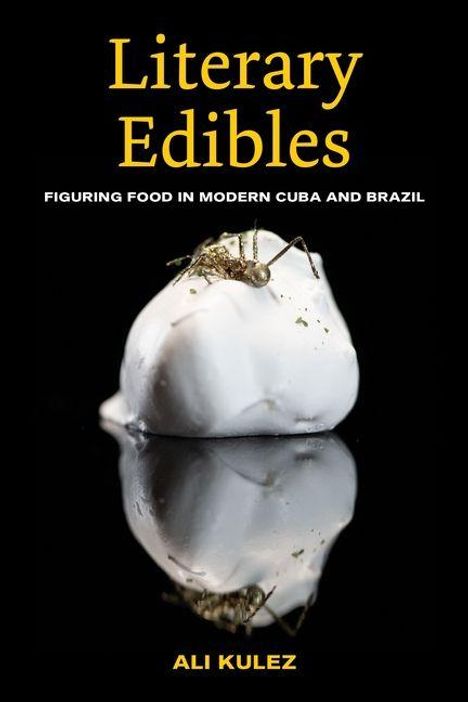
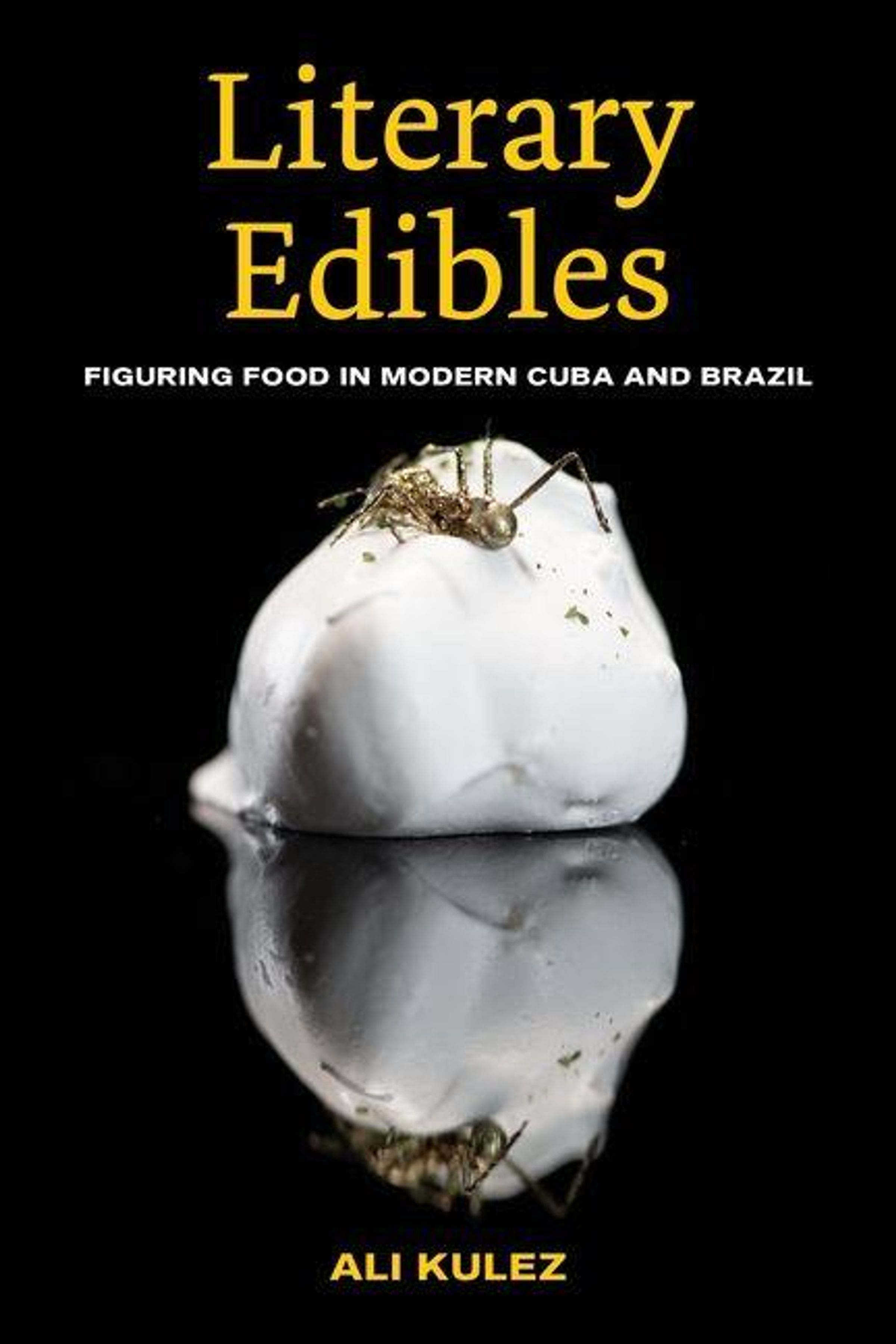
Ali Kulez: Literary Edibles, Gebunden
Literary Edibles
- Figuring Food in Modern Cuba and Brazil
Sie können den Titel schon jetzt bestellen. Versand an Sie erfolgt gleich nach Verfügbarkeit.
- Verlag:
- Fordham University Press, 04/2027
- Einband:
- Gebunden
- Sprache:
- Englisch
- ISBN-13:
- 9781531516086
- Artikelnummer:
- 12904089
- Umfang:
- 224 Seiten
- Erscheinungstermin:
- 6.4.2027
- Hinweis
-
Achtung: Artikel ist nicht in deutscher Sprache!
Weitere Ausgaben von Literary Edibles |
Preis |
|---|---|
| Buch, Kartoniert / Broschiert, Englisch | EUR 41,04* |
Klappentext
Literary Edibles shows how literature can subvert the material and discursive frameworks that delimit edibility. Rather than approaching food anthropologically, Kulez investigates how literary works disfigure foodways, often beyond recognition. Through a speculative engagement with the domain of eating, he shows how Cuban and Brazilian authors deconstruct identity and imagine dissident alternatives.
Literary Edibles examines how Latin American authors meditate on food's becoming-inedible, whether due to crises and hierarchies that make it inaccessible or due to its reduction to signs in the space of literature. At the same time, Kulez examines a series of works that render edible what is often taken to be inedible: the abject, the sacred, or the poisonous. In conversation with new materialisms, Kulez shows that this repartition of edibility gestures towards more conscientious forms of expression and belonging, forms that expose the nation as a contingent and colonial construct, and aspire for embodied, relational, and cosmopolitan aesthetics. Through close readings of works by Oswald de Andrade, Virgilio Piñera, José Lezama Lima, Rubem Fonseca, and Antonio José Ponte, Kulez argues that literary edibles subvert the borders and temporalities of the nation-state, as well as its claims to unity, sovereignty, and progress.
Establishing a critical dialogue across Hispanophone and Lusophone texts between the modernist trope of cannibalism and speculative imaginings of local fruits, meals, and beverages, Kulez overcomes a longstanding divide in Latin American cultural studies. More broadly, Literary Edibles challenges the unexamined premises of new materialism by revealing how edible matter can act on us in its very absence, as signs, and how language can actively reconfigure the material realm of eating.