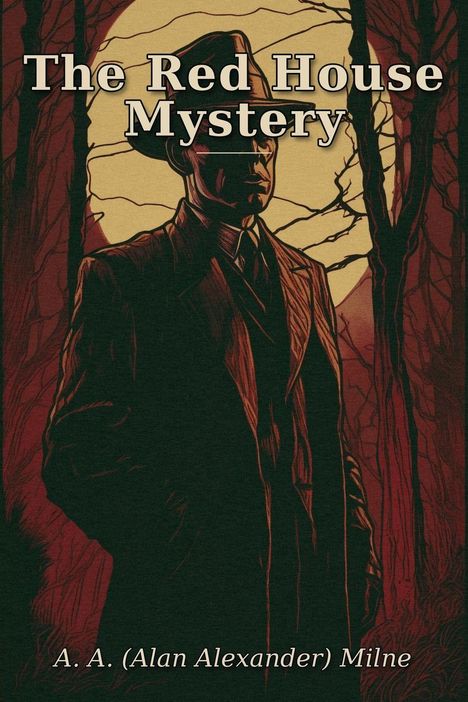
Alan Alexander Milne: The Red House Mystery, Kartoniert / Broschiert
The Red House Mystery
(soweit verfügbar beim Lieferanten)
- Verlag:
- Ottavio Ferrante, 09/2026
- Einband:
- Kartoniert / Broschiert
- Sprache:
- Englisch
- ISBN-13:
- 9783726232146
- Artikelnummer:
- 12941299
- Umfang:
- 224 Seiten
- Gewicht:
- 332 g
- Maße:
- 229 x 152 mm
- Stärke:
- 12 mm
- Erscheinungstermin:
- 15.9.2026
- Hinweis
-
Achtung: Artikel ist nicht in deutscher Sprache!
Klappentext
is a whodunnit published in 1922. When a black sheep brother arrives at an English country house and is found shot dead, the host mysteriously vanishes. An amateur detec tive visiting a friend decides to investigate, playing Sherlock Holmes while clues mount and theories multiply. Milne's only mystery novel became im mediatelypopular, thoughitlatersparkeddebateaboutthemeritsofGolden Age detective fiction and its preference for charming amateurs over profes sional investigators. WhetherMark Ablettwasa bore or notdependedon the point of view, but it may be said at once that he never bored his company on the subject of his early life. However, stories get about. There is always somebody who knows. It was understood-and this, anyhow, on Mark's own authority- that his father had been a countryclergyman. Itwassaidthat, asaboy, Mark had attracted the notice, and patronage, of some rich old spinster of the neighbourhood, who had paid for his education, both at school and uni versity. At about the time when he was coming down from Cambridge, his father had died; leaving behind him a few debts, as a warning to his family, and a reputation for short sermons, as an example to his successor. Nei ther warning nor example seems to have been effective. Mark went to Lon don, with an allowance from his patron, and (it is generally agreed) made acquaintance with the money-lenders. He was supposed, by his patron and any others who inquired, to be "writing"; but what he wrote, other than letters asking for more time to pay, has never been discovered. However, he attended the theatres and music halls very regularly-no doubt with a view to some serious articles in the "Spectator" on the decadence of the English