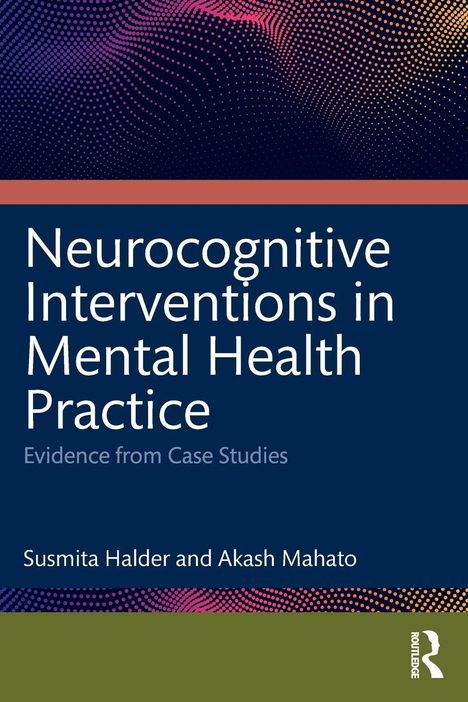
Akash Mahato: Neurocognitive Interventions in Mental Health Practice, Kartoniert / Broschiert
Neurocognitive Interventions in Mental Health Practice
- Evidence from Case Studies
Sie können den Titel schon jetzt bestellen. Versand an Sie erfolgt gleich nach Verfügbarkeit.
- Verlag:
- Taylor & Francis Ltd, 11/2026
- Einband:
- Kartoniert / Broschiert
- Sprache:
- Englisch
- ISBN-13:
- 9781041357957
- Artikelnummer:
- 12826116
- Umfang:
- 292 Seiten
- Erscheinungstermin:
- 16.11.2026
- Hinweis
-
Achtung: Artikel ist nicht in deutscher Sprache!
Weitere Ausgaben von Neurocognitive Interventions in Mental Health Practice |
Preis |
|---|---|
| Buch, Gebunden, Englisch | EUR 256,63* |
Klappentext
This book provides an in-depth exploration of cognitive changes associated with various mental health and neurodevelopmental conditions and offers evidence-based neurocognitive intervention strategies tailored to each disorder. This book serves as a comprehensive resource for clinicians, researchers, and mental health practitioners seeking to integrate cognitive training into therapeutic practice.
Through a case-based approach, this book elucidates the theoretical foundations and practical application of neurocognitive interventions, including cognitive remediation therapy, metacognitive training, compensatory strategy development, and executive function enhancement techniques. Each chapter presents structured intervention plans targeting condition-specific deficits in memory, attention, executive function, processing speed, visuo-spatial skills, and language. The conditions covered are diverse, including ADHD, autism, learning disabilities, oppositional defiant disorder / conduct disorder, digital addiction primarily seen in children and adolescents, as well as major conditions like schizophrenia, depression, obsessive-compulsive disorder, stress-related disorders, mild cognitive impairment, early dementia, chronic pain, and diabetes primarily seen in adult and elderly populations.
This book is a vital resource for students, researchers, and professionals in psychology, psychiatry, neuroscience, and rehabilitation sciences. It serves clinical psychologists, neuropsychologists, psychiatrists, neurologists, cognitive rehabilitation specialists, and educators. Additionally, it benefits occupational therapists, speech-language pathologists, special educators, and policymakers, addressing cognitive challenges in diverse populations for academic and clinical use.