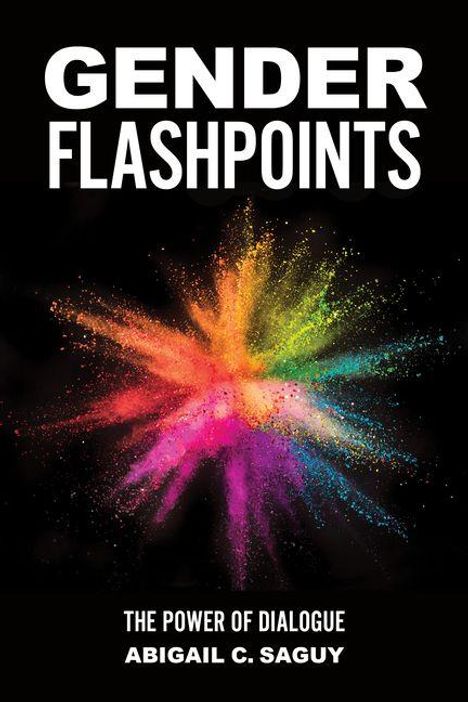
Abigail C Saguy: Gender Flashpoints, Kartoniert / Broschiert
Gender Flashpoints
- The Power of Dialogue
(soweit verfügbar beim Lieferanten)
- Verlag:
- Russell Sage Foundation, 06/2026
- Einband:
- Kartoniert / Broschiert
- Sprache:
- Englisch
- ISBN-13:
- 9780871548511
- Artikelnummer:
- 12624994
- Umfang:
- 200 Seiten
- Gewicht:
- 454 g
- Maße:
- 229 x 152 mm
- Stärke:
- 18 mm
- Erscheinungstermin:
- 8.6.2026
- Hinweis
-
Achtung: Artikel ist nicht in deutscher Sprache!
Klappentext
Americans are deeply divided about gender. Like other issues in the U. S., debates about gender are extremely polarized and can spark intense anger and conflict. These "gender flashpoints" include gender identity, gender and parenting, gender-neutral restrooms, the use of identifying pronouns, and participation in women's sports. Even the term gender itself has become contested. In this divisive social context, advocates on both sides have reduced complex issues to all-or-nothing propositions. Many people are confused about these topics, embarrassed about what they do not know, or afraid that they will be called a bigot if they say the "wrong thing." In Gender Flashpoints, sociologist Abigail C. Saguy gets to the root of these major disagreements about gender.
Saguy interviews activists across the full political spectrum about a wide range of contemporary debates over gender to better understand points of contention as well as surprising areas of agreement. She finds that at the crux of many of these debates are disputes about the goals of gender-related advocacy, the strategies to achieve these goals, and whose rights are being advocated for. For example, when discussing pregnancy-related policy issues, there is disagreement as to whether the term "pregnant person" or "pregnant woman" should be used. While some believe "pregnant person" affirms the existence of nonbinary people and trans men, others believe it erases women. These differences often appear to be simply about language, but they are, in fact, disagreements on worldviews, identities, and legitimacy.
One of the conflicts Saguy dives into is the issue of gender-neutral restrooms. She finds when interviewing different activists about what they thought of the topic, they initially repeated the familiar, mainstream polarized discourse. LGBTQ+ activists and mainstream feminists emphasized the importance of restroom access, especially for transgender and gender-nonconforming people. Conservatives and gender-critical feminists emphasized women's and girls' vulnerability and need for privacy and safety in public restrooms. Across the political spectrum, activists spoke about how those on the "other side" were unwilling to engage in productive dialogue. However, Saguy also finds that activists on both sides recognized the complexity of the issue and agreed on the need for public bathrooms that provided everyone with greater safety and privacy. Activists across the spectrum showed enthusiasm for desegregated public restrooms that include an open space for sinks and mirrors--along with toilets with European style, fully enclosed floor-to-ceiling doors. Saguy advocates for engaging in dialogue about charged issues, such as gender-neutral bathrooms, in order to help identify workable solutions to seemingly intractable social problems.
Gender Flashpoints is a fascinating and comprehensive view of the deeply personal and divisive topic of gender that offers hope for finding common ground and a path forward.