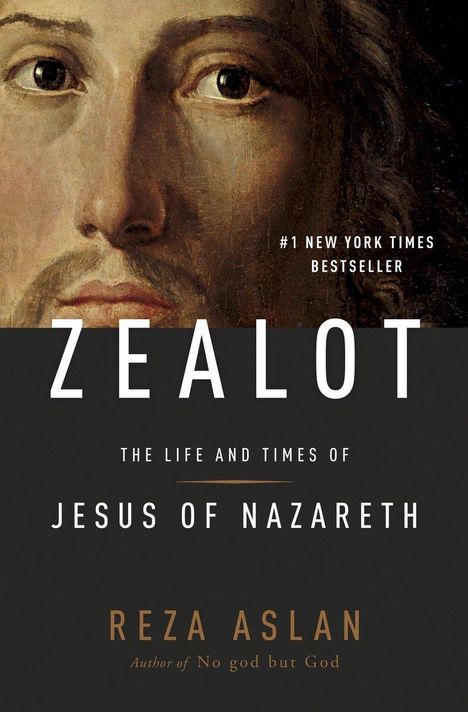
Reza Aslan: Zealot, Gebunden
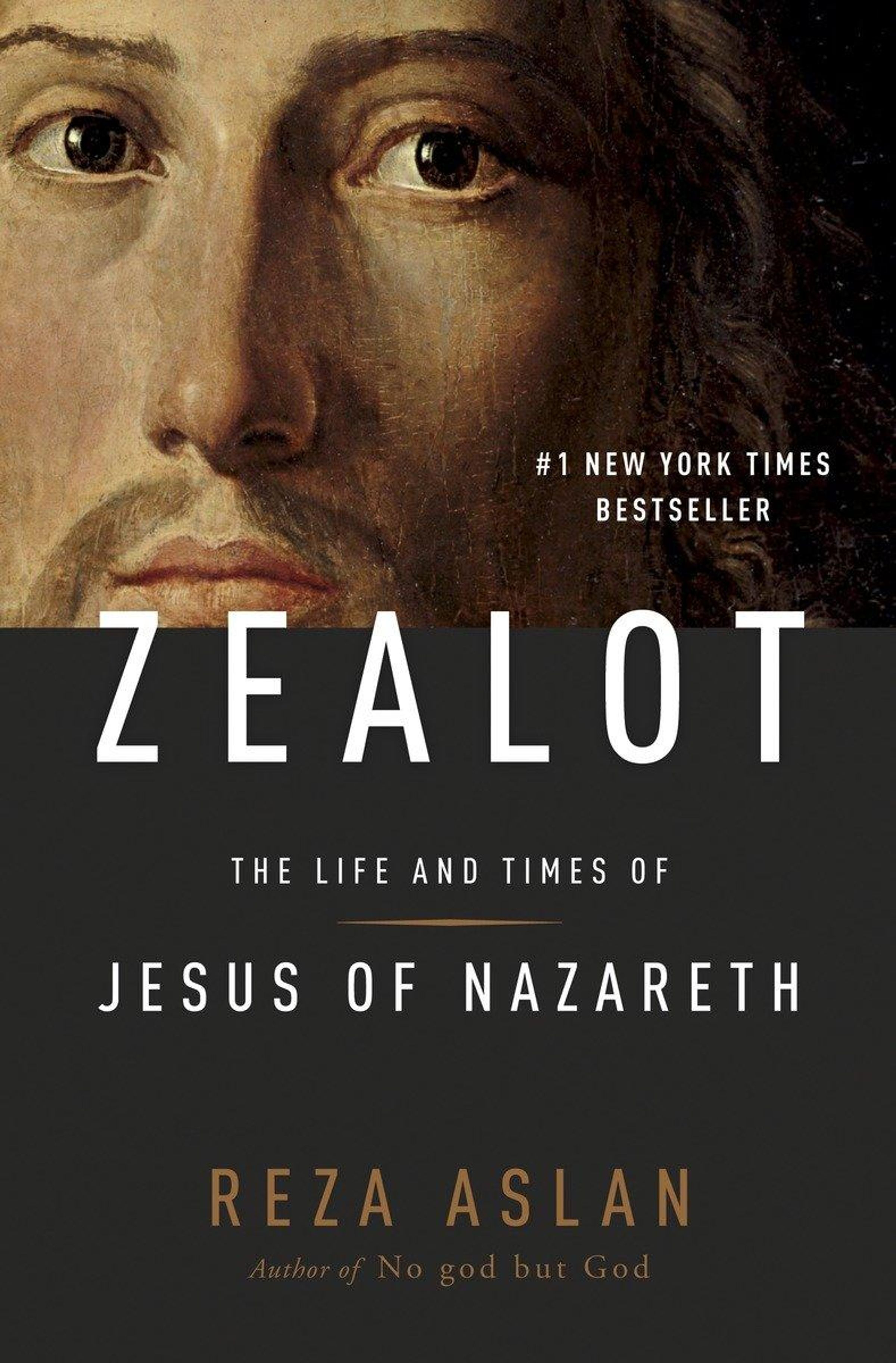
Zealot
- The Life and Times of Jesus of Nazareth
- Verlag:
- Random House LLC US, 07/2013
- Einband:
- Gebunden, ,
- Sprache:
- Englisch
- ISBN-13:
- 9781400069224
- Artikelnummer:
- 3516650
- Umfang:
- 336 Seiten
- Sonstiges:
- MAP, ILLUSTRATION
- Copyright-Jahr:
- 2013
- Gewicht:
- 565 g
- Maße:
- 241 x 161 mm
- Stärke:
- 38 mm
- Erscheinungstermin:
- 16.7.2013
- Hinweis
-
Achtung: Artikel ist nicht in deutscher Sprache!
Weitere Ausgaben von Zealot |
Preis |
|---|
Kurzbeschreibung
Presents a meticulously researched biography of Jesus that draws on biblical and historical sources to place his achievements and influence against the turbulent backdrop of his time.
Beschreibung
No. 1 NEW YORK TIMES BESTSELLER
NAMED ONE OF THE BEST BOOKS OF THE YEAR BY
Good Housekeeping - Booklist - Publishers Weekly - Bookish
From the internationally bestselling author of No god but God comes a fascinating, provocative, and meticulously researched biography that challenges long-held assumptions about the man we know as Jesus of Nazareth.
Two thousand years ago, an itinerant Jewish preacher and miracle worker walked across the Galilee, gathering followers to establish what he called the "Kingdom of God." The revolutionary movement he launched was so threatening to the established order that he was captured, tortured, and executed as a state criminal.
Within decades after his shameful death, his followers would call him God.
Sifting through centuries of mythmaking, Reza Aslan sheds new light on one of history's most influential and enigmatic characters by examining Jesus through the lens of the tumultuous era in which he lived: first-century Palestine, an age awash in apocalyptic fervor. Scores of Jewish prophets, preachers, and would-be messiahs wandered through the Holy Land, bearing messages from God. This was the age of zealotry - a fervent nationalism that made resistance to the Roman occupation a sacred duty incumbent on all Jews. And few figures better exemplified this principle than the charismatic Galilean who defied both the imperial authorities and their allies in the Jewish religious hierarchy.
Balancing the Jesus of the Gospels against the historical sources, Aslan describes a man full of conviction and passion, yet rife with contradiction; a man of peace who exhorted his followers to arm themselves with swords; an exorcist and faith healer who urged his disciples to keep his identity a secret; and ultimately the seditious "King of the Jews" whose promise of liberation from Rome went unfulfilled in his brief lifetime. Aslan explores the reasons why the early Christian church preferred to promulgate an image of Jesus as a peaceful spiritual teacher rather than a politically conscious revolutionary. And he grapples with the riddle of how Jesus understood himself, the mystery that is at the heart of all subsequent claims about his divinity.
Zealot yields a fresh perspective on one of the greatest stories ever told even as it affirms the radical and transformative nature of Jesus of Nazareth's life and mission. The result is a thought-provoking, elegantly written biography with the pulse of a fast-paced novel: a singularly brilliant portrait of a man, a time, and the birth of a religion.
Praise for Zealot
"Riveting . . . Aslan synthesizes Scripture and scholarship to create an original account." - The New Yorker
"A lucid, intelligent page-turner." - Los Angeles Times
"Fascinatingly and convincingly drawn . . . Aslan may come as close as one can to respecting those who revere Jesus as the peace-loving, turn-the-other-cheek, true son of God depicted in modern Christianity, even as he knocks down that image." - The Seattle Times
"[Aslan's] literary talent is as essential to the effect of Zealot as are his scholarly and journalistic chops. . . . A vivid, persuasive portrait." - Salon
"This tough-minded, deeply political book does full justice to the real Jesus, and honors him in the process." - San Francisco Chronicle
Rezension
"Riveting . . . Aslan synthesizes Scripture and scholarship to create an original account." - The New Yorker
"A lucid, intelligent page-turner." - Los Angeles Times
"Aslan's insistence on human and historical actuality turns out to be far more interesting than dogmatic theology. . . . This tough-minded, deeply political book does full justice to the real Jesus, and honors him in the process." - San Francisco Chronicle
"Aslan brings a fine popular style, shorn of all jargon, to bear on the presentation of Jesus of Nazareth. . . . He isn't interested in attacking religion or even the church, much less in comparing Christianity unfavorably to another religion. He would have us admire Jesus as one of the many would-be messiahs who sprang up during Rome's occupation of Palestine, animated by zeal for 'strict adherence to the Torah and the Law,' refusal to serve a human master, and devotion to God, and therefore dedicated to throwing off Rome and repudiating Roman religion. . . . You don't have to lose your religion to learn much that's vitally germane to its history from Aslan's absorbing, reader-friendly book." - Booklist (starred review)
"Be advised, dear reader, Sunday school this isn't. Yet Aslan may come as close as one can to respecting those who revere Jesus as the peace-loving, turn-the-other-cheek, true son of God depicted in modern Christianity, even as he knocks down that image. . . . Aslan is steeped in the history, languages and scriptural foundation of the biblical scholar and is a very clear writer with an authoritative, but not pedantic, voice. Those of us who wade into this genre often know how rare that is. . . . Fascinatingly and convincingly drawn." - The Seattle Times
"[Aslan's] literary talent is as essential to the effect of Zealot: The Life and Times of Jesus of Nazareth as are his scholarly and journalistic chops. . . . A vivid, persuasive portrait of the world and societies in which Jesus lived and the role he most likely played in both. . . . Fascinating." - Salon
"Accessibly and strongly presented . . . Readable and with scholarly endnotes, Aslan's book offers a historical perspective that is sure to generate spirited conversation." - Library Journal
"A well-researched, readable biography of Jesus of Nazareth. Jesus of Nazareth is not the same as Jesus Christ. The Gospels are not historical documents. . . . Why has Christianity taken hold and flourished? This book will give you the answers." - Kirkus Reviews (starred review)
"[Aslan] parts an important curtain that has long hidden from view the man Jesus. . . . Aslan develops a convincing and coherent story of how the Christian church, and in particular Paul, reshaped Christianity's essence, obscuring the very real man who was Jesus of Nazareth. Compulsively readable and written at a popular level, this superb work is highly recommended." - Publishers Weekly (starred review)
"A bold, powerfully argued revisioning of the most consequential life ever lived." - Lawrence Wright, Pulitzer Prize–winning author of Going Clear: Scientology, Hollywood, and the Prison of Belief
"The story of Jesus of Nazareth is arguably the most influential narrative in human history. Here Reza Aslan writes vividly and insightfully about the life and meaning of the figure who has come to be seen by billions as the Christ of faith. This is a special and revealing work, one that believer and skeptic alike will find surprising, engaging, and original." - Jon Meacham, Pulitzer Prize–winning author of Thomas Jefferson: The Art of Power
"In Zealot , Reza Aslan doesn't just synthesize research and reimagine a lost world, though he does those things very well. He does for religious history what Bertolt Brecht did for playwriting. Aslan rips Jesus out of all the contexts we thought he belonged in and holds him forth as someone entirely new. This is Jesus as a passionate Jew, a violent revolutionary, a fanatical ideologue, an odd and s
Klappentext
#1 NEW YORK TIMES BESTSELLER • From the acclaimed author of No god but God comes "a lucid, intelligent page-turner" (Los Angeles Times) that challenges long-held assumptions about Jesus.
"Riveting . . . [Reza] Aslan synthesizes Scripture and scholarship to create an original account."---The New Yorker
Two thousand years ago, an itinerant Jewish preacher walked across the Galilee, gathering followers to establish what he called the "Kingdom of God." The revolutionary movement he launched was so threatening to the established order that he was executed as a state criminal. Within decades after his death, his followers would call him God.
Sifting through centuries of mythmaking, Reza Aslan sheds new light on one of history's most enigmatic figures by examining Jesus through the lens of the tumultuous era in which he lived. Balancing the Jesus of the Gospels against the historical sources, Aslan describes a man full of conviction and passion, yet rife with contradiction. He explores the reasons the early Christian church preferred to promulgate an image of Jesus as a peaceful spiritual teacher rather than a politically conscious revolutionary. And he grapples with the riddle of how Jesus understood himself, the mystery that is at the heart of all subsequent claims about his divinity.
Zealot yields a fresh perspective on one of the greatest stories ever told even as it affirms the radical and transformative nature of Jesus' life and mission.
Auszüge aus dem Buch
Chapter One
A Hole in the Corner
Who killed Jonathan son of Ananus as he strode across the Temple Mount in the year 56 c. e.? No doubt there were many in Jerusalem who longed to slay the rapacious high priest, and more than a few who would have liked to wipe out the bloated Temple priesthood in its entirety. For what must never be forgotten when speaking of first-century Palestine is that this land - this hallowed land from which the spirit of God flowed to the rest of the world - was occupied territory. Legions of Roman troops were stationed throughout Judea. Some six hundred Roman soldiers resided atop the Temple Mount itself, within the high stone walls of the Antonia Fortress, which buttressed the northwest corner of the Temple wall. The unclean centurion in his red cape and polished cuirass who paraded through the Court of Gentiles, his hand hovering over the hilt of his sword, was a not so subtle reminder, if any were needed, of who really ruled this sacred place.
Roman dominion over Jerusalem began in 63 b. c.e., when Rome's master tactician, Pompey Magnus, entered the city with his conquering legions and laid siege to the Temple. By then, Jerusalem had long since passed its economic and cultural zenith. The Canaanite settlement that King David had recast into the seat of his kingdom, the city he had passed to his wayward son, Solomon, who built the first Temple to God - sacked and destroyed by the Babylonians in 586 b. c.e. - the city that had served as the religious, economic, and political capital of the Jewish nation for a thousand years, was, by the time Pompey strode through its gates, recognized less for its beauty and grandeur than for the religious fervor of its troublesome population.
Situated on the southern plateau of the shaggy Judean mountains, between the twin peaks of Mount Scopus and the Mount of Olives, and flanked by the Kidron Valley in the east and the steep, forebidding Valley of Gehenna in the south, Jerusalem, at the time of the Roman invasion, was home to a settled population of about a hundred thousand people. To the Romans, it was an inconsequential speck on the imperial map, a city the wordy statesman Cicero dismissed as "a hole in the corner." But to the Jews this was the navel of the world, the axis of the universe. There was no city more unique, more holy, more venerable in all the world than Jerusalem. The purple vineyards whose vines twisted and crawled across the level plains, the well-tilled fields and viridescent orchards bursting with almond and fig and olive trees, the green beds of papyrus floating lazily along the Jordan River - the Jews not only knew and deeply loved every feature of this consecrated land, they laid claim to all of it. Everything from the farmsteads of the Galilee to the low-lying hills of Samaria and the far outskirts of Idumea, where the Bible says the accursed cities of Sodom and Gomorrah once stood, was given by God to the Jews, though in fact the Jews ruled none of it, not even Jerusalem, where the true God was worshipped. The city that the Lord had clothed in splendor and glory and placed, as the prophet Ezekiel declared, "in the center of all nations" - the eternal seat of God's kingdom on earth - was, at the dawn of the first century c. e., just a minor province, and a vexing one at that, at the far corner of the mighty Roman Empire.
It is not that Jerusalem was unaccustomed to invasion and -occupation. Despite its exalted status in the hearts of the Jews, the truth is that Jerusalem was little more than a trifle to be passed among a succession of kings and emperors who took turns -plundering and despoiling the sacred city on their way to far grander ambitions. In 586 b. c.e. the Babylonians - masters of Mesopotamia - rampaged through Judea, razing both Jerusalem and its Temple to the ground. The Babylonians were conquered by the Persians, who all
Biografie
Reza Aslan ist Associate Professor of Creative Writing und Cooperating Faculty im Department of Religion an der University of California, Riverside. 1972 im Iran geboren, floh er nach der Revolution dort mit seiner Familie in die USA. Mit 15 wurde er evangelikaler Christ, kehrte später aber zum Islam zurück. Er studierte Religion in Santa Clara und Harvard und promovierte in Religionssoziologie an der University of California, Santa Barbara. Als Truman Capote Fellow an der University of Iowa absolvierte er den berühmten Writers' Workshop. Er publiziert in zahlreichen Medien.