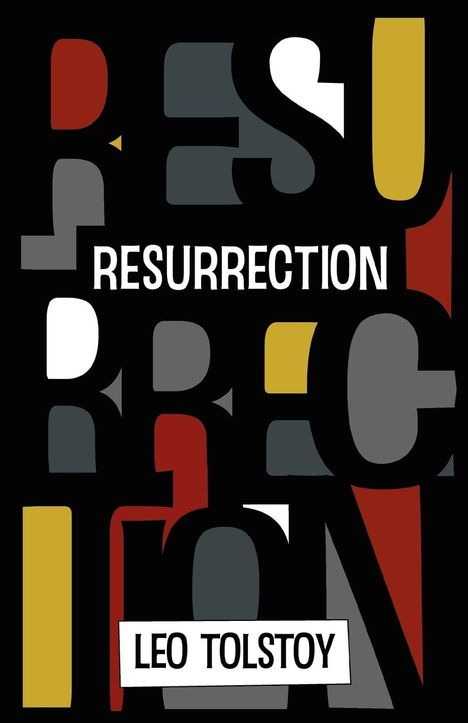
Leo N. Tolstoi: Resurrection, Kartoniert / Broschiert
Resurrection
(soweit verfügbar beim Lieferanten)
- Verlag:
- White Crow Books, 11/2010
- Einband:
- Kartoniert / Broschiert, Paperback
- Sprache:
- Englisch
- ISBN-13:
- 9781907661099
- Artikelnummer:
- 9106198
- Umfang:
- 548 Seiten
- Gewicht:
- 689 g
- Maße:
- 216 x 140 mm
- Stärke:
- 32 mm
- Erscheinungstermin:
- 1.11.2010
- Hinweis
-
Achtung: Artikel ist nicht in deutscher Sprache!
Weitere Ausgaben von Resurrection |
Preis |
|---|---|
| Buch, Gebunden, Englisch | EUR 109,90* |
| Buch, Kartoniert / Broschiert, Englisch | EUR 89,90* |
| Buch, Gebunden, Englisch | EUR 32,40* |
| Buch, Gebunden, Englisch | EUR 20,21* |
Klappentext
Published in 1900, 'Resurrection' is Tolstoy's final large-scale novel. It's a morally-driven tale of personal redemption, featuring fewer characters than either War and Peace or Anna Karenina. Here we focus on one man and a single story line that spirals around a long-forgotten incident in his youth, which turns out to have had tragic consequences for another.
The hero is the young St Petersburg aristocrat, Prince Dmitri. Having seduced a woman - Katyusha - and made her pregnant, he'd left her on her on her own and had thought no more about her until ten years later, he finds himself on a jury trying her for murder. It becomes apparent that her life fell apart after their brief liaison; the baby died, and she drifted into alcoholism and prostitution. As he hears the story, Dmitri feels personally responsible for all that has happened, and after Katyusha is unjustly sent to Siberia, he begins a spiritual journey to save both her and himself. Can he ever make up for what he did to her all those years ago?
It's a quest which takes him to the highest offices in the land and to the bleakest prisons, as the absurdities and inequalities of pre-revolution Russia are savagely exposed. Dmitri uncovers a moral wasteland of vested interest and uncaring attitudes, with Tolstoy particularly hostile towards the Orthodox Church, which excommunicated him a year later, and the Russian penal system. Just as Dickens did in England, Tolstoy exposes the misery of the Russian under-class, but he's less sentimental than Dickens and angrier. And there are echoes here of another voice as well. As Boyd Tonkin said, 'Nowhere does Tolstoy sound closer in spirit to his old foe, Dostoyevsky.'
There is an interesting back-story to the book itself. Though finished in 1899 and published in 1900, it was started ten years previously in 1889, and might never have been completed but for Tolstoy's desire to help raise funds for the persecuted Doukhobor sect. The royalties from the book were given to the Doukhabors to fund their emigration to Canada.
In the Doukhabors, (which literally means, 'spiritual wrestlers') Tolstoy found an antidote to the religion and society he denounces in 'Resurrection'; and a living embodiment of his own religious and social ideas. Here were a people committed to honest toil, living off the land, communal sharing, pacifist principles and the teachings of Christ in deed. As Tolstoy wrote in one of his many letters to them, 'You are taking the lead and many are grateful to you for that. There is so much I'd like to tell you, and so much to learn from you.'
The book continues to divide literary opinion. As a conduit for both beautiful writing and naked sermonising, 'Resurrection' is not a novel that invites the reader to make up their own mind. Instead, here is the raw energy of rage which finally erupted in the volcano that was the Russian Revolution of 1917.
Biografie
Tolstoi wurde am 9. September 1828 in Jasnaja Poljana bei Tula geboren und starb am 20. November 1910 in Astapowo, heute zur Oblast Lipezk an einer Lungenentzündung. Tolstoj entstammte einem russischen Adelsgeschlecht. Als er mit neun Jahren Vollwaise wurde, übernahm die Schwester seines Vaters die Vormundschaft. An der Universität Kasan begann er 1844 das Studium orientalischer Sprachen. Nach einem Wechsel zur juristischen Fakultät brach er das Studium 1847 ab, um zu versuchen, die Lage der 350 geerbten Leibeigenen im Stammgut der Familie in Jasnaja Poljana mit Landreformen zu verbessern. Er erlebte von 1851 an in der zaristischen Armee die Kämpfe im Kaukasus und nach Ausbruch des Krimkriegs 1854 den Stellungskrieg in der belagerten Festung Sewastopol. Die Berichte aus diesem Krieg (1855: Sewastopoler Erzählungen) machten ihn als Schriftsteller früh bekannt. Er bereiste aus pädagogischem Interesse 1857 und 1860/61 westeuropäische Länder und traf dort auf Künstler und Pädagogen. Nach der Rückkehr verstärkte er die reformpädagogischen Bestrebungen und richtete Dorfschulen nach dem Vorbild Rousseaus ein. Seit 1855 lebte er abwechselnd auf dem Gut Jasnaja Poljana, in Moskau, und in Sankt Petersburg. Im Jahre 1862 heiratete er die 18-jährige deutschstämmige Sofja Andrejewna Behrs, mit der er insgesamt 13 Kinder hatte. In den folgenden Jahren seiner Ehe schrieb er die monumentalen Romane Krieg und Frieden sowie Anna Karenina , die Tolstojs literarischen Weltruhm begründeten.§Tolstois lebenslange Suche nach der geeigneten Lebensform kulminierte 1910 darin, daß er seine Frau verließ, da diese nicht bereit war, sich von den gemeinsamen Besitztümern zu trennen. Er starb kurze Zeit darauf an einer Lungenentzündung.Mehr von Leo N. Tolstoi