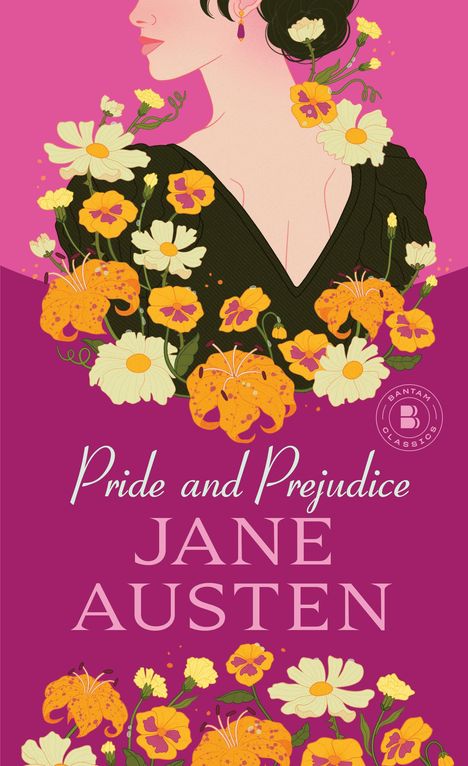
Jane Austen: Pride and Prejudice, Kartoniert / Broschiert
Pride and Prejudice

(soweit verfügbar beim Lieferanten)
- Verlag:
- Random House Publishing Group, 12/1983
- Einband:
- Kartoniert / Broschiert
- Sprache:
- Englisch
- ISBN-13:
- 9780553213102
- Artikelnummer:
- 2205883
- Umfang:
- 352 Seiten
- Gewicht:
- 172 g
- Maße:
- 174 x 105 mm
- Stärke:
- 18 mm
- Erscheinungstermin:
- 1.12.1983
- Hinweis
-
Achtung: Artikel ist nicht in deutscher Sprache!
Weitere Ausgaben von Pride and Prejudice |
Preis |
|---|---|
| Buch, Kartoniert / Broschiert, Englisch | EUR 27,28* |
| Buch, Gebunden, Englisch | EUR 17,55* |
| Buch, Kartoniert / Broschiert, Englisch | EUR 6,38* |
| Buch, Kartoniert / Broschiert, Englisch | EUR 10,37* |
| Buch, Gebunden, Englisch | EUR 19,55* |
| Buch, Gebunden, Englisch | EUR 35,99* |
| Buch, Flexibler Einband, ,, Englisch | EUR 10,37* |
| Buch, Gebunden, Englisch | EUR 18,95* |
| Buch, Gebunden, Englisch | EUR 9,00* |
| Buch, Kartoniert / Broschiert, Englisch | EUR 13,83* |
| Buch, Gebunden, Englisch | EUR 22,87* |
| Buch, Gebunden, Englisch | EUR 15,00* |
Klappentext
Jane Austen's classic tale of the fiery relationship between Elizabeth Bennet and Mr. Darcy---a sharp portrait of love, social class, and wealth in Regency-era England
Nominated as one of America's best-loved novels by PBS's The Great American Read
"It is a truth universally acknowledged, that a single man in possession of a good fortune must be in want of a wife."
So begins Pride and Prejudice, Jane Austen's witty comedy of manners---one of the most popular novels of all time---that features splendidly civilized sparring between the proud Mr. Darcy and the prejudiced Elizabeth Bennet as they play out their spirited courtship in a series of nineteenth-century drawing-room intrigues.
A timeless tale with deeply resonant reflections on societal expectations and the complexities of love, Pride and Prejudicehas garnered exceptional praise since its original publication in 1813.Renowned literary critic and historian George Saintsbury in 1894 declared it the "most perfect, the most characteristic, the most eminently quintessential of its author's works," and Eudora Welty in the twentieth century described it as "irresistible and as nearly flawless as any fiction could be."