Herbert Marcuse: Negations, Kartoniert / Broschiert
Negations
- Essays in Critical Theory
(soweit verfügbar beim Lieferanten)
- Herausgeber:
- Steffen G. Bohm
- Verlag:
- MayFlyBooks/Ephemera, 05/2009
- Einband:
- Kartoniert / Broschiert, Paperback
- Sprache:
- Englisch
- ISBN-13:
- 9781906948047
- Artikelnummer:
- 3307626
- Umfang:
- 246 Seiten
- Gewicht:
- 266 g
- Maße:
- 198 x 129 mm
- Stärke:
- 13 mm
- Erscheinungstermin:
- 1.5.2009
- Hinweis
-
Achtung: Artikel ist nicht in deutscher Sprache!
Klappentext
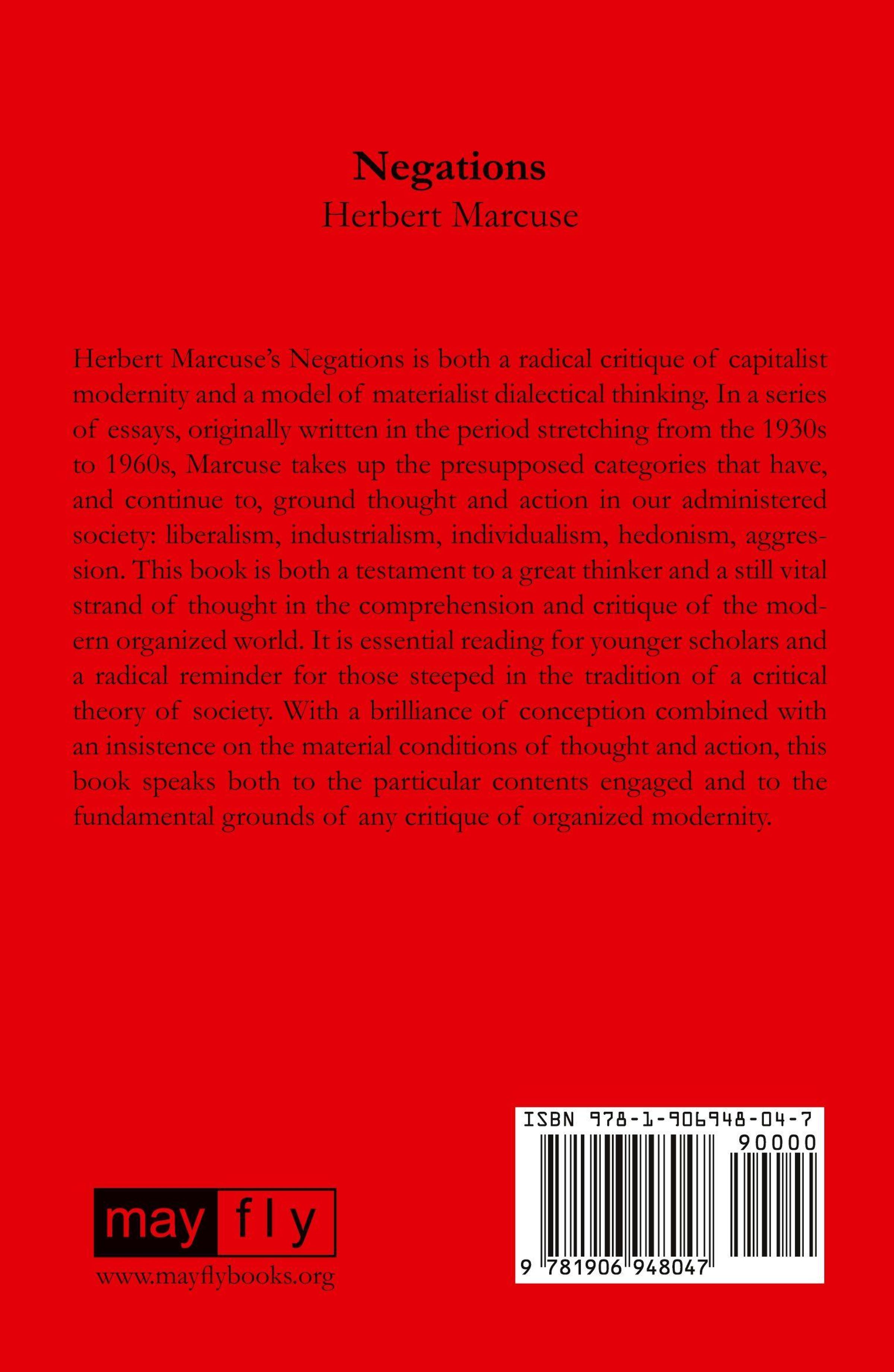
Herbert Marcuse's Negations is both a radical critique of capitalist modernity and a model of materialist dialectical thinking. In a series of essays, originally written in the period stretching from the 1930s to 1960s, Marcuse takes up the presupposed categories that have, and continue to, ground thought and action in our administered society: liberalism, industrialism, individualism, hedonism, aggression. This book is both a testament to a great thinker and a still vital strand of thought in the comprehension and critique of the modern organized world. It is essential reading for younger scholars and a radical reminder for those steeped in the tradition of a critical theory of society. With a brilliance of conception combined with an insistence on the material conditions of thought and action, this book speaks both to the particular contents engaged and to the fundamental grounds of any critique of organized modernity.