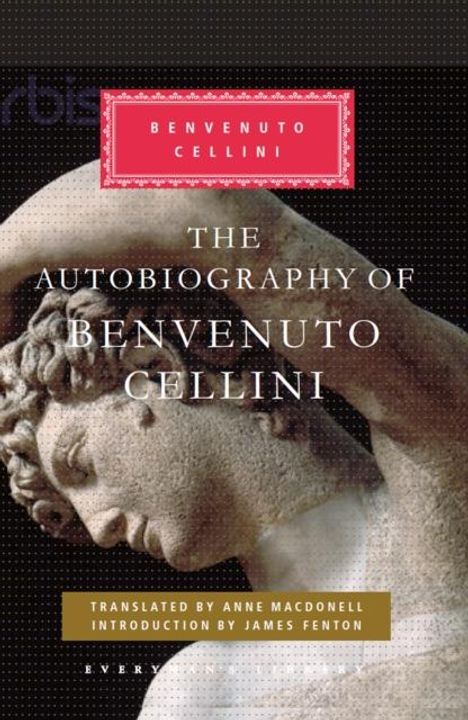
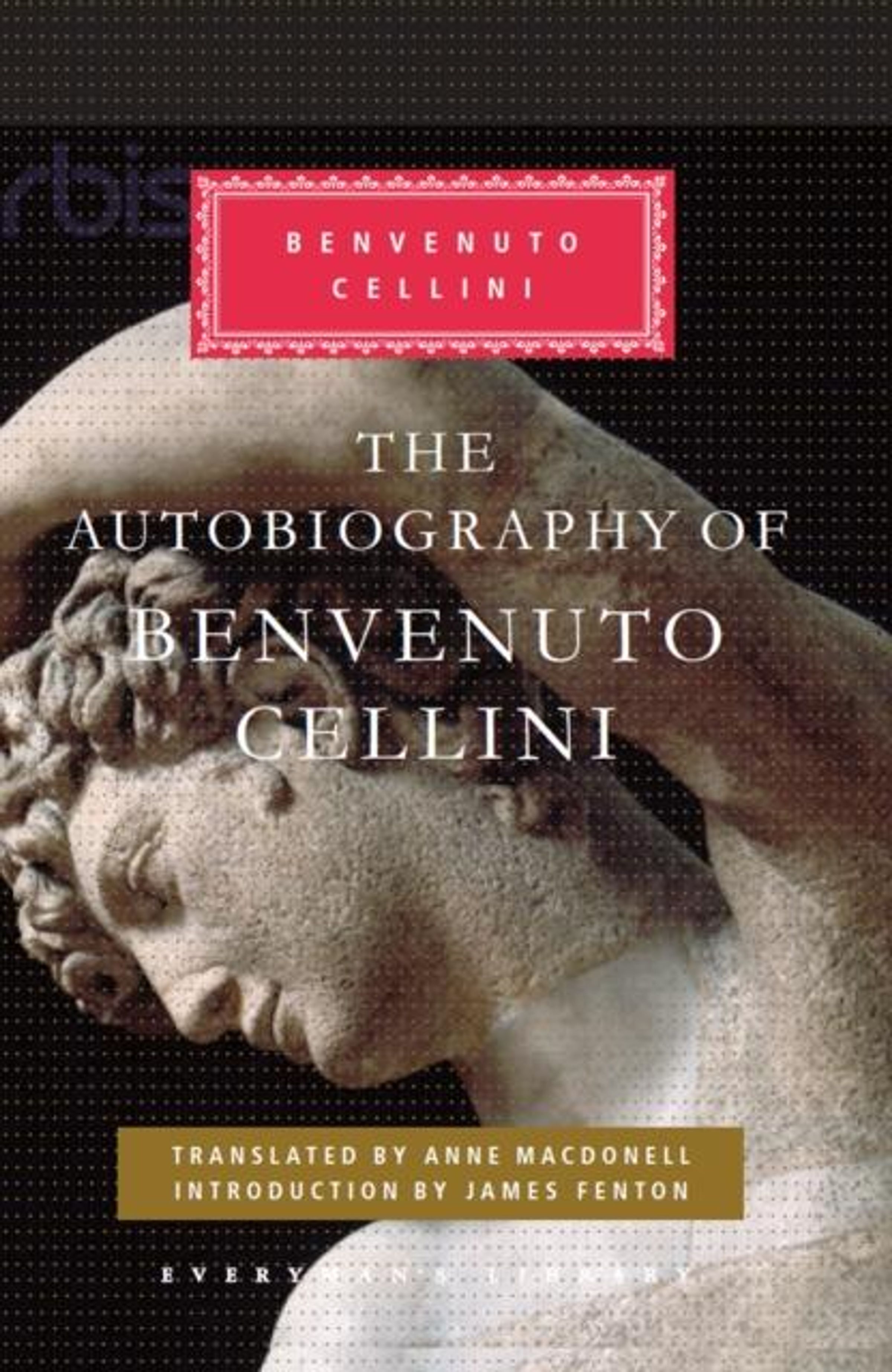
Benvenuto Cellini: The Autobiography of Benvenuto Cellini, Gebunden
The Autobiography of Benvenuto Cellini
(soweit verfügbar beim Lieferanten)
- Verlag:
- Everyman, 04/2010
- Einband:
- Gebunden, ,
- Sprache:
- Englisch
- ISBN-13:
- 9781841593289
- Artikelnummer:
- 7291734
- Umfang:
- 540 Seiten
- Gewicht:
- 578 g
- Maße:
- 211 x 134 mm
- Stärke:
- 30 mm
- Erscheinungstermin:
- 30.4.2010
- Hinweis
-
Achtung: Artikel ist nicht in deutscher Sprache!
Weitere Ausgaben von The Autobiography of Benvenuto Cellini |
Preis |
|---|---|
| Buch, Kartoniert / Broschiert, Englisch | EUR 89,90* |
| Buch, Gebunden, Englisch | EUR 109,90* |
Klappentext
Benvenuto Cellini is an artist-craftsman, one of the greatest sculptors in the renaissance, passionately devoted to art, the worshipper and frequenter of the great men of his time, the 'divine' Michelangelo, who came to his studio, the 'marvellous' Titian (the adjectives are Cellini's ). He loathed the sculptor Torregiano because he had broken Michelangelo's nose. His autobiography gives a quite extraordinarily vivid account of daily life in Renaissance Florence and Rome, its studios, its taverns, its violence, his loves, the kings, cardinals and popes who commission his works. At 27 he helps direct the defence of the castello San Angelo; his account of his imprisonment there under a mad castellan (who thought he was a bat), his escape by an improvised rope, his recapture, his confinement in 'a cell of tarantulas and venomous worms' is a chapter of adventure equal to any in fact or fiction. Later he describes burning all his furniture to achieve sufficient heat to cast of one of his most famous works, Perseus and the Head of Medusa.
Cellini's Life was translated by Goethe into German. The Everyman translation by Anne Macdonell (1903) is widely recognised as the most faithful to the energy and spirit of the original.
Biografie
Benvenuto Cellini, 1500 - 1571, war in Florenz, Siena, Pisa, Rom und Paris tätig, zu seinen Gönnern zählten Papst Clemens VII., Franz I. und Cosimo I. de Medici. Das Salzfass für Franz I. (Kunsthistorisches Museum, Wien), die Nymphe von Fontainebleau (Louvre, Paris), Perseus (Loggia dei Lanzi,Florenz) und das Kruzifix (El Escorial, Madrid) gehören zu seinen bekanntesten Werken.